Business License

Application of UHF RFID Apparel Tags in Fast‑Fashion Supply Chain Traceability
Introduction
The fast-fashion industry thrives on rapid design iteration, short production cycles, and high-volume product turnover to capture fleeting consumer fashion trends. However, its ultra-fast operational model also brings inherent supply chain challenges, including opaque product circulation, inaccurate inventory data, inefficient manual auditing, and difficulty in tracking cross-regional goods distribution. Traditional traceability solutions relying on barcodes and manual recording can no longer meet the industry’s demands for real-time, item-level, and full-link supply chain management. As a non-contact, high-efficiency automatic identification technology, Ultra-High Frequency (UHF) RFID apparel tags have gradually become a core tool for fast-fashion brands to realize intelligent supply chain traceability. With unique advantages of long reading range, batch identification, and durable data storage, UHF RFID tags empower every garment with an exclusive digital identity, breaking information barriers across production, warehousing, logistics, retail and after-sales links, and greatly improving the transparency and operational efficiency of fast-fashion supply chains.
Core Advantages of UHF RFID Apparel Tags for Fast-Fashion Scenarios
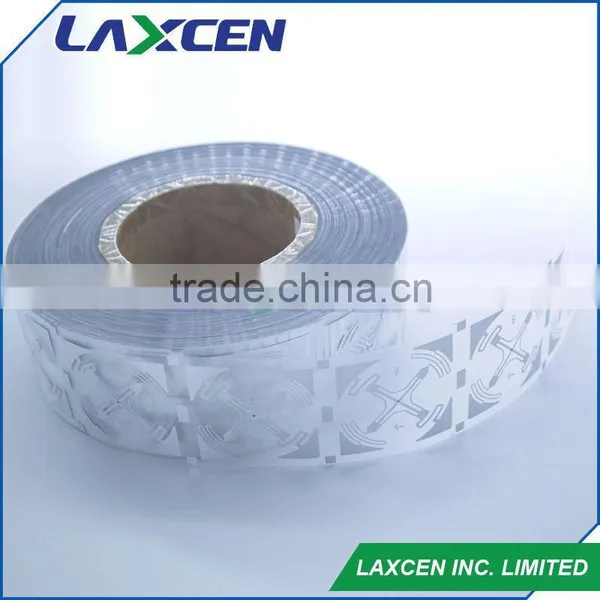
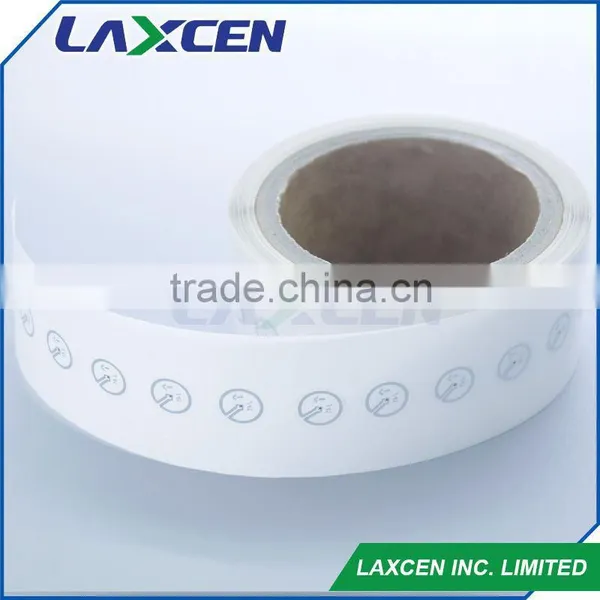
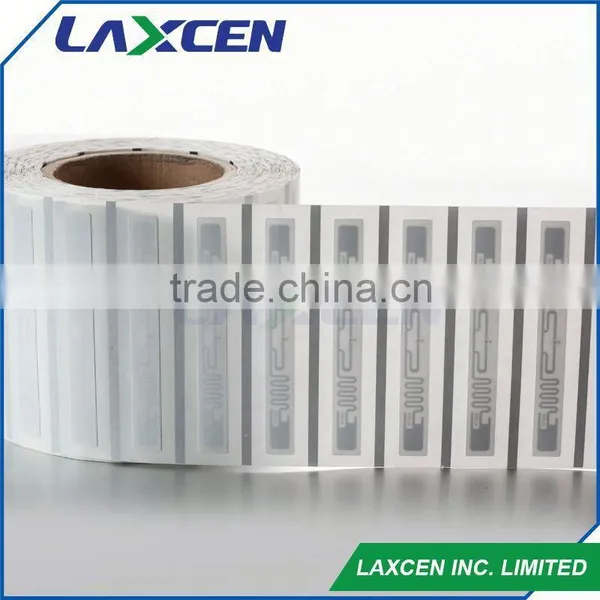
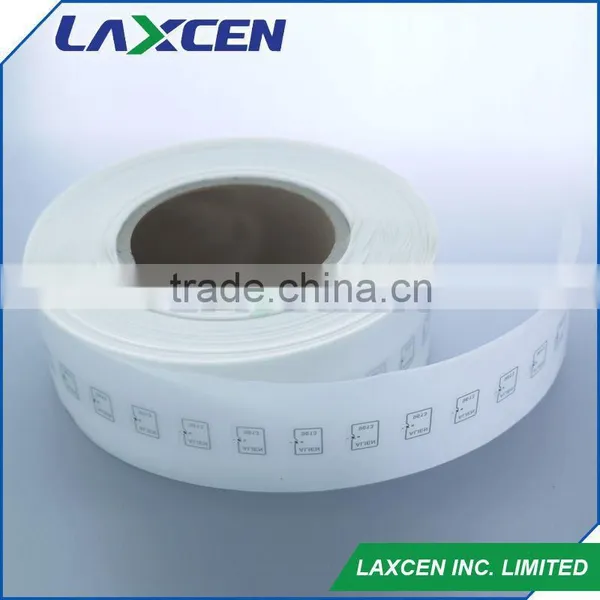
Different from high-frequency NFC tags and traditional one-dimensional barcodes, UHF RFID apparel tags are tailored to the high-frequency, large-batch, and high-speed operational characteristics of fast fashion, with scenario-matched technical and cost advantages. First, UHF RFID tags support long-distance and batch non-contact reading, with an effective reading range of up to 8–10 meters. Hundreds of garments can be identified and recorded per second without line-of-sight alignment, which is more than 10 times efficient than traditional barcode scanning. This feature perfectly adapts to high-speed sorting and inventory checking in fast-fashion factories and large-scale warehouses.
Second, compliant with ISO 18000-6C and GS1 EPC Gen2v2 international standards, UHF RFID apparel tags have unique global identification codes, realizing the “one item, one code” item-level traceability. Compared with barcodes that only support batch identification, each garment can be independently tracked throughout its lifecycle. In addition, modern embedded heat-seal UHF RFID labels have excellent durability, resisting washing, ironing, and extrusion during garment processing and consumer use, ensuring stable data reading throughout the product sales cycle.
More importantly, with large-scale industrial application, the unit cost of UHF RFID inlays has been significantly reduced, meeting the low-cost demand of fast fashion’s low-margin and high-volume business model. Balancing high performance and low cost, UHF RFID tags have become the most cost-effective traceability solution for the fast-fashion industry.
Full-Link Application of UHF RFID Tags in Fast-Fashion Supply Chain Traceability
1. Production and Manufacturing Link: Standardize Process Tracking
Fast-fashion brands feature diverse styles and short production cycles, making process supervision and quality tracing difficult in traditional manual production modes. By embedding UHF RFID tags at the initial stage of garment manufacturing, brands can bind each product with core information including style, size, color, production batch, processing factory, and production time. Fixed RFID reading devices are deployed on each production process node. When garments pass through the process station, the system automatically records the completion status, processing duration, and operator information in real time.
This automated recording method avoids data errors and omissions caused by manual statistics, standardizes the production management process, and enables brands to monitor production progress in real time. Once defective products appear, enterprises can quickly locate the problematic production link and batch through tag data, realizing precise quality traceability and standardized production management.
2. Warehousing and Inventory Link: Improve Inventory Accuracy and Efficiency
Inventory backlog and inaccurate inventory data are major pain points restricting the profitability of fast-fashion enterprises. Traditional manual inventory counting is time-consuming and labor-intensive, with low accuracy, easily leading to “phantom inventory” — inconsistent system data and actual stock, resulting in out-of-stock sales opportunities or overstock waste.
The application of UHF RFID tags completely optimizes warehouse inventory management. Inbound and outbound goods can be batch scanned and automatically recorded, realizing unmanned rapid verification of goods. For daily inventory checking, staff can complete full-warehouse inventory statistics through handheld RFID readers in a short time, replacing the traditional manual counting mode that takes dozens of hours. Industry practice shows that after deploying UHF RFID technology, the inventory accuracy of fast-fashion brands can be increased from 87% to more than 99.6%, and the inventory efficiency of a single store can be improved by more than 90%. Real-time and accurate inventory data helps brands dynamically adjust stocking strategies, reduce inventory backlog, and cut warehousing and management costs.
3. Logistics and Distribution Link: Realize Transparent Circulation
Fast-fashion products involve multi-link circulation from factory warehouses, regional distribution centers to offline stores and online warehouses, and the discrete logistics process leads to opaque product flow information. UHF RFID tags build a full-process logistics tracking system for garments. In the links of warehouse transfer, cross-city distribution, and store replenishment, RFID reading equipment automatically collects product circulation information, uploads it to the supply chain management system in real time, and records the time and location of each circulation node.
This transparent logistics management mode effectively prevents goods diversion and cross-region sales chaos, helps brands accurately grasp product sales trends in different regions, and provides data support for subsequent production and distribution decisions. At the same time, it improves the timeliness of goods replenishment and ensures the matching of store inventory and market demand.
4. Retail Terminal Link: Empower Omnichannel Retail
In the era of omnichannel retail, fast-fashion brands need to coordinate online e-commerce sales and offline physical store operations. UHF RFID traceability system connects the inventory data of online and offline channels, realizing unified scheduling of global goods resources. Supported by real-time RFID inventory data, businesses can smoothly carry out click-and-collect, ship-from-store and other omnichannel services, effectively improving consumer shopping experience and order fulfillment efficiency.
In addition, RFID tags also support store intelligent operation management. Intelligent shelves equipped with RFID readers can monitor product placement and stock status in real time, automatically remind staff of out-of-stock and misplaced goods, and optimize store display and replenishment efficiency. After products are sold, the system can also automatically count sales data, form sales portraits of different styles, and provide accurate market feedback for brand design and procurement planning.
Typical Industry Application Case
As a global benchmark brand in fast fashion, Zara has fully deployed passive UHF RFID apparel tags in its global supply chain, achieving remarkable supply chain optimization results. The brand integrates UHF RFID tags into garment hang tags and price tags, realizing item-level full-life cycle tracking from factory production to retail terminals. After the deployment, Zara’s store inventory accuracy has stabilized above 99%, and the original 40-hour single-store manual inventory work is compressed to only a few hours. The efficient traceability system supports its fast iteration model of “new products launched twice a week”, greatly improving the brand’s market response speed and core competitiveness. This successful case fully verifies the practical value of UHF RFID tags in optimizing fast-fashion supply chain operation.
Challenges and Future Development Trends
Although UHF RFID apparel tags have obvious advantages in fast-fashion supply chain traceability, the industry still faces some challenges at this stage. First, small and medium-sized fast-fashion enterprises have insufficient investment capacity in RFID equipment and system construction, resulting in low industry penetration. Second, the standardization of tag data interface needs to be further unified, and data docking between different brand systems and logistics platforms still has barriers. In addition, the recyclability and environmental protection of RFID tags need to be improved to adapt to the industry’s sustainable development trend.
In the future, with the continuous progress of technology and the reduction of overall application costs, UHF RFID traceability systems will be further popularized in the fast-fashion industry. Meanwhile, the integration of UHF RFID with blockchain, big data and artificial intelligence technology will become the mainstream trend. Blockchain technology will further ensure the immutability and credibility of traceability data, realizing authentic product anti-counterfeiting and full-link traceability for consumers. Big data analysis based on RFID operational data will help brands realize intelligent prediction of market demand, precise production scheduling and refined supply chain management, further driving the intelligent upgrading of the fast-fashion industry.
Conclusion
UHF RFID apparel tags have completely solved the pain points of low efficiency, low transparency and low accuracy in traditional fast-fashion supply chain traceability by virtue of their unique technical advantages. They realize full-link, item-level and real-time traceability management covering production, warehousing, logistics and retail, effectively improving supply chain operational efficiency, reducing enterprise operating costs, and empowering the high-speed iteration and omnichannel development of fast fashion. With the continuous integration of digital technologies, UHF RFID will become an indispensable digital infrastructure for the fast-fashion supply chain, leading the industry to move towards intelligence, refinement and transparency.
Recently Posted
-
How NFC Adhesive Tags Simplify Asset Management for Exhibitions, Stores and Offices
August 31, 2026IntroductionAsset management is a core operational task for exhibitions, retail stores, and modern offices, yet it remains plagued by outdated, labor-intensive workflows. Traditional management methods—including manual spreadsheet logging, barcode scanning, and visual inventory checks—are prone to human errors, time lags, and data inconsistencies. For temporary exhibition venues with frequently moved equipment, retail storesRead More -
Innovative Uses of NFC Tags for Smart Packaging and Interactive Product Marketing
August 31, 2026IntroductionIn the fast-evolving landscape of consumer marketing and packaging design, brands are constantly seeking ways to transform passive product packaging into active, value-driven touchpoints. Traditional packaging primarily serves basic functions: protecting products, displaying brand information, and conveying usage instructions. However, with the rapid development of proximity communication technology, NFC (Near FieRead More -
Common Pitfalls and Practical Solutions for Fashion Brands Deploying RFID Tags
August 31, 2026In the fast-paced fashion industry, precision inventory control, seamless supply chain circulation, and omnichannel retail efficiency have become core competitive advantages for brands. Radio Frequency Identification (RFID) technology has emerged as a game-changing tool for fashion businesses, enabling real-time inventory tracking, fast stock counting, anti-theft monitoring, and streamlined warehouse and in-store operations.Read More -
How RFID Apparel Tags Boost Inventory Counting Efficiency in Fashion Retail Stores
August 31, 2026IntroductionFashion retail is a fast-paced, trend-driven industry defined by frequent product rotations, vast SKU varieties, and strict customer experience demands. From seasonal collections and diverse sizes, colors, and styles to omnichannel sales models, apparel retailers face persistent inventory management challenges. For decades, most fashion stores relied on manual checks and barcode scanning for inventory counting—proRead More

Contact Us
Recommended Products
-
 2016 New Design RFID Windshield TagUS$ 0.1 - 0.35MOQ: 1 Piece
 -
Professional Mould Design Impinj m4 Rfid LabelUS$ 0.07 - 0.15MOQ: 1 Piece
-
Waterproof Washable Rfid Tags Rfid Sticker Tag Printing & Encoding Service N9US$ 0.05 - 0.15MOQ: 2000 Pieces
-
Custom Passive Programmable Impinj UHF RFID Label E44US$ 0.05 - 0.15MOQ: 2000 Pieces
-
ISO18000-6C Impinj Uhf Rfid Tags Label,uhf Rfid Tags Label,uhf Rfid TagsUS$ 0.05 - 0.05MOQ: 1 Piece
-
Long Read Range UHF Rfid TagUS$ 0.05 - 0.15MOQ: 2000 Pieces
-
Top Quality , General-purpose RFID Inlay , RFID TagUS$ 0.07 - 0.15MOQ: 2000 Pieces
-
Full-Specturm of UHF RFID RFID InlayUS$ 0.05 - 0.15MOQ: 1 Piece
-
Top Selling Rfid Uhf Rfid Label Printing & Encoding Service Laxcen--9662US$ 0.05 - 0.15MOQ: 2000 Pieces
-
UHF Rifd Tag , Rfid Inlay Manufacturer With 10 Years ExperienceUS$ 0.05 - 0.15MOQ: 2000 Pieces
-
Free Sample Impinj Monza 4E UHF RFID Tag RFID Inlay F43US$ 0.05 - 0.15MOQ: 2000 Pieces
-
High Quality EPC Class 1 Gen2 Rfid Tag , Laxcen With Impinj Authorized E53US$ 0.05 - 0.15MOQ: 2000 Pieces
-
Top Quality , UHF RFID Tag , Alien h3 Rfid TagUS$ 0.05 - 0.15MOQ: 1 Piece
-
Best Selling UHF RFID Inlay Label EPC C1 Gen2 E70US$ 0.05 - 0.15MOQ: 2000 Pieces
-
Top Selling, High Quality, UHF RFID Tag Label Manufacturer With 10 Years Experience Alien 9620US$ 0.05 - 0.15MOQ: 2000 Pieces
-
Best Seller With Hot Product Rfid Tag ,rfid Inlay ,wet Inlay ,from Laxcen H42US$ 0.05 - 0.15MOQ: 2000 Pieces
-
Small Size Top Quality RFID Tag,100% Qualified Product J41US$ 0.05 - 0.15MOQ: 2000 Pieces
-
Top Selling, High Quality, UHF RFID Tag Label Manufacturer With 10 Years Experience Alien 9640US$ 0.05 - 0.15MOQ: 2000 Pieces
-
ALN 9613 Best Selling, High Quality, UHF RFID Tag Label Manufacturer With 10 Years Experience Alien 9613US$ 0.05 - 0.15MOQ: 2000 Pieces
-
Custom UHF RFID Label Manufacturer With 10 YearsUS$ 0.05 - 0.15MOQ: 2000 Pieces