Business License

Walmart RFID Mandate: Key Compliance Requirements for Suppliers
Introduction
Walmart’s item-level RFID tagging mandate has become a non-negotiable standard for all global suppliers partnering with the retail giant. Fully enforced in 2026 across all mandated product categories, this policy replaces traditional barcode-based inventory management with high-precision UHF RFID technology to boost inventory accuracy, streamline warehouse operations, eliminate stockouts, and enhance omnichannel retail experiences. For suppliers, compliance is no longer an optional upgrade but a critical business requirement—non-compliant shipments face rejection at Walmart distribution centers, chargeback fees, and even terminated partnership qualifications. This blog breaks down the core, up-to-date compliance requirements, technical specifications, and operational rules every Walmart supplier must follow to avoid penalties and maintain supply chain eligibility.
Why Walmart Implements the Strict RFID Mandate
Before diving into compliance rules, it is essential to understand the core purpose of Walmart’s RFID policy, which helps suppliers align their operational upgrades with retail industry standards. Traditional barcode systems only deliver 60%–70% inventory accuracy, requiring manual scanning and counting that is time-consuming and error-prone. By adopting item-level UHF RFID tagging, Walmart lifts its inventory accuracy to 95%–99%, enabling real-time stock tracking, automated warehouse receiving, faster order fulfillment, and optimized in-store shelf replenishment.
The mandate covers a wide range of high-volume categories, including apparel, footwear, home goods, toys, and seasonal products. Unlike early RFID pilot programs that allowed case-level tagging, the 2026 full compliance rule requires tagging for every individual sellable unit, marking a comprehensive upgrade to the retail supply chain transparency system.
Core Technical Compliance Requirements for Suppliers
Walmart has established rigid, standardized technical specifications for RFID tags, encoding, and hardware, with zero tolerance for non-compliant configurations. All suppliers must adhere to the following mandatory technical rules.
1. Certified RFID Tag Hardware & Chips
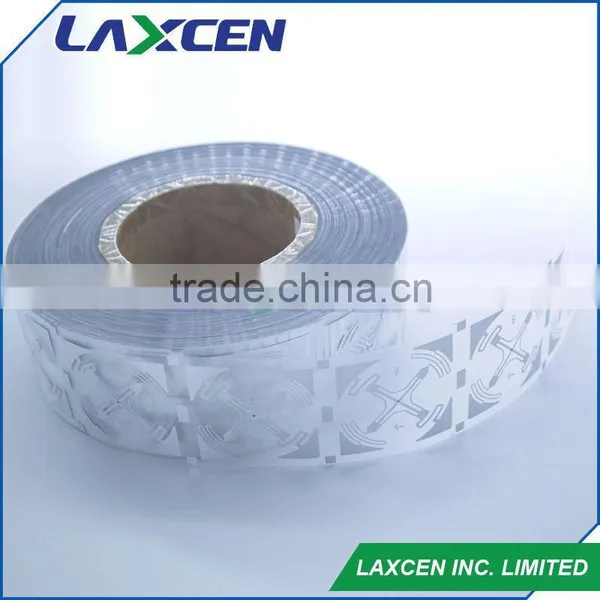
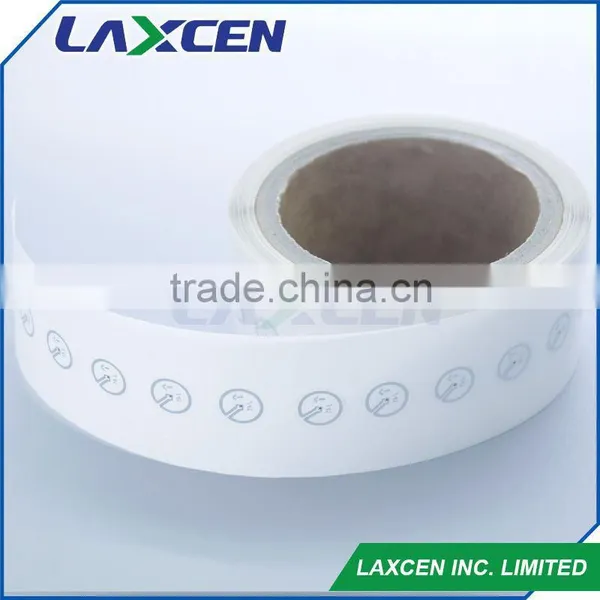
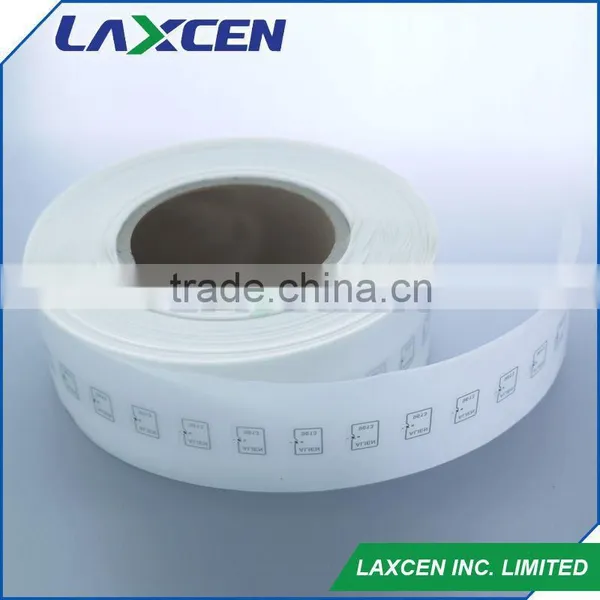
Tag qualification is the foundation of compliance. Walmart exclusively accepts tags certified by the Auburn University RFID Lab (ARC) with Y2 specification, the official industry benchmark for retail RFID performance. Suppliers cannot use generic RFID tags; uncertified inlays will fail Walmart’s system detection and result in shipment rejection.
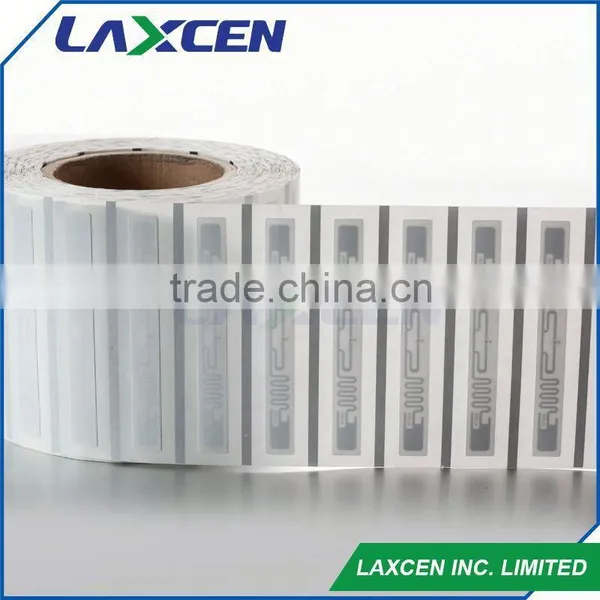
In terms of chip selection, only two mainstream certified chip families are approved: Impinj Monza R6, R6-P, M730, M780 series and NXP UCODE 8/9 series. These chips deliver stable reading sensitivity (≥-22dBm) and anti-interference performance, adapting to diverse product materials including fabric, plastic, and daily necessities. Notably, suppliers must match tag forms to product categories—for example, dogbone inlays are mandatory for apparel products to ensure optimal reading efficiency.
2. Mandatory GS1 SGTIN-96 EPC Encoding
Data encoding standardization is a key mandatory rule. All RFID tags must be encoded with the GS1 SGTIN-96 EPC format, the only recognized data structure for Walmart’s inventory system. The encoding must integrate the supplier’s official GS1 GTIN prefix, valid UPC information, and a unique serial number for each individual product unit.
Suppliers must deploy professional encoding software and equipment (such as Zebra RFD8500 encoders or Printronix RFID thermal-transfer printers) to generate serial numbers. It is critical to pre-set serial number ranges to avoid data collisions across production devices, which will cause system recognition failures. Duplicate or non-standard EPC data is one of the most common causes of compliance failures.
3. Standardized Tag Placement Rules
Even qualified tags and encoding will fail compliance if placed incorrectly. Walmart has unified global tag placement standards to ensure consistent scanning and reading across warehouses and stores. Suppliers must attach tags on the designated blank area of product packaging or labels, avoiding metal surfaces, folded seams, and thick foam materials that block RFID signals.
For apparel and soft goods, tags must be fixed on the inner or outer product label without covering product information. For hard goods and toys, tags should be placed on flat packaging surfaces to maximize signal reception. All placement operations must be standardized on the production line to ensure 100% uniformity of finished products.
Operational & Data Compliance Rules
Beyond technical hardware and encoding standards, Walmart’s 2026 mandate also enforces strict operational and data synchronization requirements to achieve end-to-end supply chain visibility.
1. Item-Level Full Tagging Coverage
The most critical operational update for 2026 is the full implementation of item-level tagging. Suppliers are no longer allowed to tag only cartons or cases. Every single sellable unit in a shipment must be equipped with a compliant RFID tag. Partial tagging or case-level-only tagging will directly lead to shipment refusal and compliance chargebacks.
2. EPCIS Data Sharing & Synchronization
Suppliers are required to upload complete EPCIS (Electronic Product Code Information Services) data to Walmart’s supply chain platform in real time before shipment. The uploaded data must include product EPC codes, production batches, shipment quantities, and logistics information. Timely data synchronization allows Walmart’s system to automatically receive, verify, and inventory goods without manual inspection, realizing fast warehouse turnover.
3. Pre-Shipment Compliance Verification
To avoid on-site rejection, suppliers must conduct self-inspection of all tagged products before delivery. Standard pre-shipment checks include tag ARC certification verification, EPC encoding accuracy, tag placement standardization, and 100% readability testing. Many qualified suppliers deploy in-house RFID encoding and testing systems to complete full inspection on the production line, effectively reducing non-compliance risks.
Common Compliance Mistakes to Avoid
Most supplier compliance failures stem from avoidable operational errors. Here are the most frequent mistakes and preventive tips:
Using non-certified tags: Generic or unARC-certified tags have unstable signal performance and cannot be identified by Walmart’s system. Always source tags from official qualified suppliers with complete certification documents.
Incorrect EPC encoding: Using non-SGTIN-96 formats or duplicate serial numbers will cause data conflicts. Unify encoding rules and pre-manage serial number ranges for all production equipment.
Improper tag placement: Blocked or misplaced tags lead to low reading rates. Formulate unified production operation guidelines for workers and strengthen on-site supervision.
Incomplete data synchronization: Delayed or missing EPCIS data uploads will affect warehouse receiving efficiency. Establish a real-time data synchronization mechanism to match shipment schedules.
Key Benefits of Full RFID Compliance for Suppliers
While the mandate increases upfront production and upgrade costs for suppliers, long-term compliance brings substantial business value. First, it eliminates compliance penalties, shipment rejections, and partnership risks, ensuring stable cooperation with Walmart. Second, standardized RFID tagging improves suppliers’ own inventory management accuracy, reducing overstock and stock loss costs.
In addition, RFID-enabled automated receiving greatly shortens Walmart’s warehouse inspection cycle, accelerating payment settlement and capital turnover for suppliers. Meanwhile, compliant RFID systems also help suppliers adapt to the unified RFID standards of major retailers including Target and Macy’s, laying a foundation for expanded retail channel cooperation.
Final Takeaways
Walmart’s 2026 RFID mandate is a landmark upgrade for the global retail supply chain, driving full digitalization and transparency of item-level inventory management. For suppliers, RFID compliance is no longer a technical adjustment but a basic threshold for sustainable retail cooperation.
To maintain compliance, suppliers need to strictly implement ARC-certified tag selection, SGTIN-96 EPC encoding, standardized tag placement, and real-time EPCIS data synchronization, while establishing perfect pre-shipment inspection mechanisms. By fully aligning with Walmart’s RFID rules, suppliers can not only avoid operational risks but also gain more efficient supply chain operations and long-term cooperative advantages in the competitive retail market.
Recently Posted
-
How NFC Adhesive Tags Simplify Asset Management for Exhibitions, Stores and Offices
August 31, 2026IntroductionAsset management is a core operational task for exhibitions, retail stores, and modern offices, yet it remains plagued by outdated, labor-intensive workflows. Traditional management methods—including manual spreadsheet logging, barcode scanning, and visual inventory checks—are prone to human errors, time lags, and data inconsistencies. For temporary exhibition venues with frequently moved equipment, retail storesRead More -
Innovative Uses of NFC Tags for Smart Packaging and Interactive Product Marketing
August 31, 2026IntroductionIn the fast-evolving landscape of consumer marketing and packaging design, brands are constantly seeking ways to transform passive product packaging into active, value-driven touchpoints. Traditional packaging primarily serves basic functions: protecting products, displaying brand information, and conveying usage instructions. However, with the rapid development of proximity communication technology, NFC (Near FieRead More -
Common Pitfalls and Practical Solutions for Fashion Brands Deploying RFID Tags
August 31, 2026In the fast-paced fashion industry, precision inventory control, seamless supply chain circulation, and omnichannel retail efficiency have become core competitive advantages for brands. Radio Frequency Identification (RFID) technology has emerged as a game-changing tool for fashion businesses, enabling real-time inventory tracking, fast stock counting, anti-theft monitoring, and streamlined warehouse and in-store operations.Read More -
Application of UHF RFID Apparel Tags in Fast‑Fashion Supply Chain Traceability
August 31, 2026IntroductionThe fast-fashion industry thrives on rapid design iteration, short production cycles, and high-volume product turnover to capture fleeting consumer fashion trends. However, its ultra-fast operational model also brings inherent supply chain challenges, including opaque product circulation, inaccurate inventory data, inefficient manual auditing, and difficulty in tracking cross-regional goods distribution. TraditionRead More

Contact Us
Recommended Products
-
 2016 New Design RFID Windshield TagUS$ 0.1 - 0.35MOQ: 1 Piece
 -
Professional Mould Design Impinj m4 Rfid LabelUS$ 0.07 - 0.15MOQ: 1 Piece
-
Waterproof Washable Rfid Tags Rfid Sticker Tag Printing & Encoding Service N9US$ 0.05 - 0.15MOQ: 2000 Pieces
-
Custom Passive Programmable Impinj UHF RFID Label E44US$ 0.05 - 0.15MOQ: 2000 Pieces
-
ISO18000-6C Impinj Uhf Rfid Tags Label,uhf Rfid Tags Label,uhf Rfid TagsUS$ 0.05 - 0.05MOQ: 1 Piece

-
Long Read Range UHF Rfid TagUS$ 0.05 - 0.15MOQ: 2000 Pieces
-
Top Quality , General-purpose RFID Inlay , RFID TagUS$ 0.07 - 0.15MOQ: 2000 Pieces
-
Full-Specturm of UHF RFID RFID InlayUS$ 0.05 - 0.15MOQ: 1 Piece
-
Top Selling Rfid Uhf Rfid Label Printing & Encoding Service Laxcen--9662US$ 0.05 - 0.15MOQ: 2000 Pieces
-
UHF Rifd Tag , Rfid Inlay Manufacturer With 10 Years ExperienceUS$ 0.05 - 0.15MOQ: 2000 Pieces
-
Free Sample Impinj Monza 4E UHF RFID Tag RFID Inlay F43US$ 0.05 - 0.15MOQ: 2000 Pieces
-
High Quality EPC Class 1 Gen2 Rfid Tag , Laxcen With Impinj Authorized E53US$ 0.05 - 0.15MOQ: 2000 Pieces
-
Top Quality , UHF RFID Tag , Alien h3 Rfid TagUS$ 0.05 - 0.15MOQ: 1 Piece
-
Best Selling UHF RFID Inlay Label EPC C1 Gen2 E70US$ 0.05 - 0.15MOQ: 2000 Pieces
-
Top Selling, High Quality, UHF RFID Tag Label Manufacturer With 10 Years Experience Alien 9620US$ 0.05 - 0.15MOQ: 2000 Pieces
-
Best Seller With Hot Product Rfid Tag ,rfid Inlay ,wet Inlay ,from Laxcen H42US$ 0.05 - 0.15MOQ: 2000 Pieces
-
Small Size Top Quality RFID Tag,100% Qualified Product J41US$ 0.05 - 0.15MOQ: 2000 Pieces
-
Top Selling, High Quality, UHF RFID Tag Label Manufacturer With 10 Years Experience Alien 9640US$ 0.05 - 0.15MOQ: 2000 Pieces
-
ALN 9613 Best Selling, High Quality, UHF RFID Tag Label Manufacturer With 10 Years Experience Alien 9613US$ 0.05 - 0.15MOQ: 2000 Pieces
-
Custom UHF RFID Label Manufacturer With 10 YearsUS$ 0.05 - 0.15MOQ: 2000 Pieces