Business License

EU Battery Passport: RFID Label as Digital Traceability Carrier
Introduction
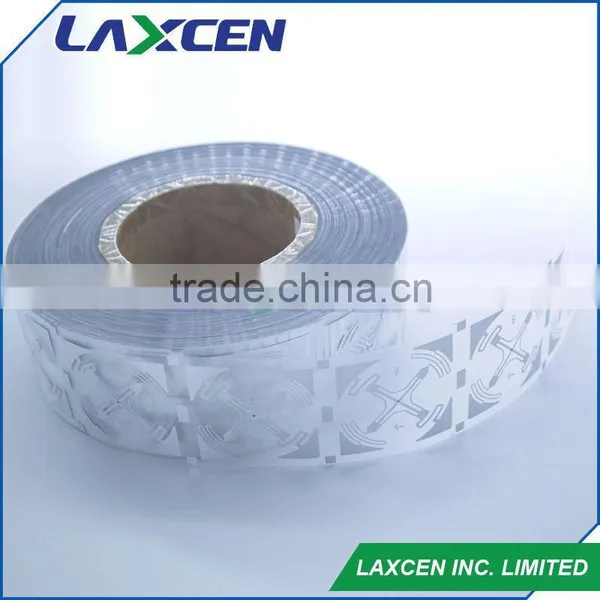
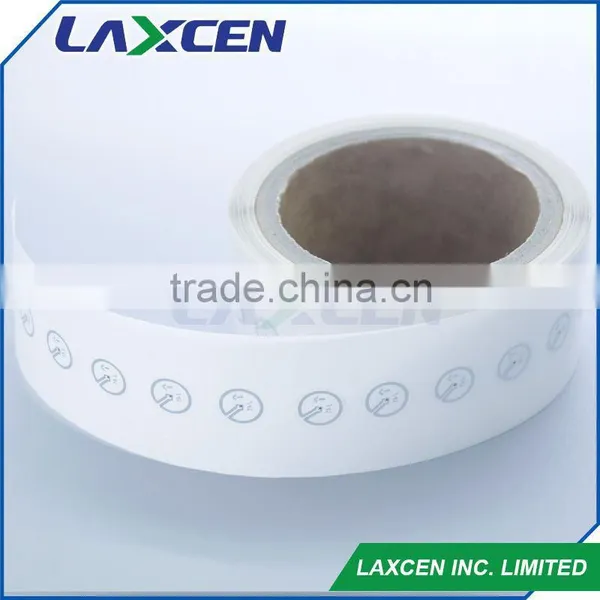
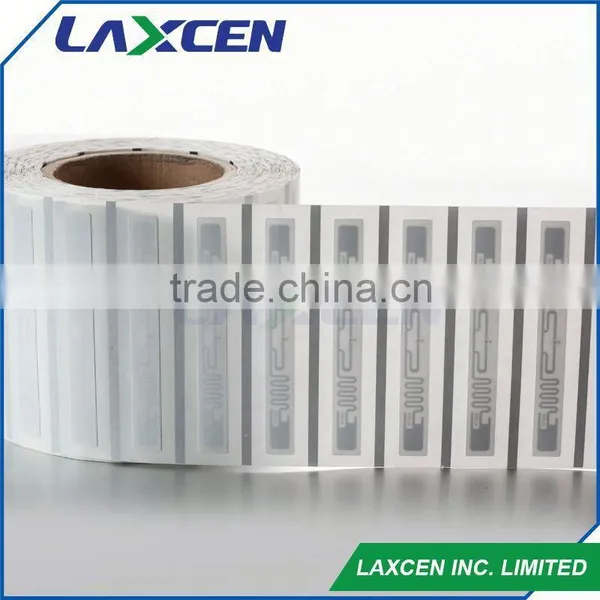
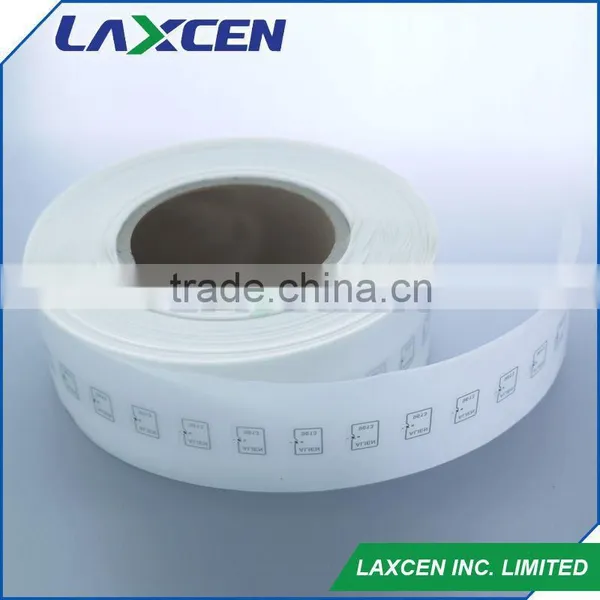
The European Union’s new battery regulatory framework (Regulation (EU) 2023/1542) marks a transformative shift in the global battery industry, prioritizing transparency, sustainability, and circularity across the entire battery value chain. Scheduled for full mandatory enforcement on February 18, 2027, the EU Battery Passport has become a core compliance requirement for all electric vehicle (EV) batteries, industrial batteries over 2 kWh, and light mobility batteries used in e-bikes and e-scooters sold in the EU market . As a pivotal digital product passport (DPP) system, it aims to eliminate information asymmetry in battery production, usage, recycling, and second-life application. Among various data carrier solutions, RFID (Radio Frequency Identification) labels have emerged as a more robust, efficient alternative to traditional QR codes, serving as the ideal digital traceability carrier for modern battery lifecycle management .
What Is the EU Battery Passport and Its Core Traceability Requirements
The EU Battery Passport is a standardized digital record that archives full-lifecycle data of every regulated battery, covering raw material sourcing, manufacturing parameters, carbon footprint assessment, real-time operational status, charging cycles, maintenance records, and end-of-life recycling information . Unlike conventional paper labels or static digital codes, it establishes a dynamic, updatable data system accessible to manufacturers, regulators, operators, and recycling institutions through authorized channels .
The primary goal of this regulation is to advance the EU’s circular economy agenda, curb illegal battery disposal, reduce carbon emissions from battery production, and improve the traceability of critical raw materials like lithium, cobalt, and nickel. To meet these strict regulatory demands, a reliable, long-lasting, and non-line-of-sight data carrier is essential—where RFID labels outperform traditional traceability tools and become a preferred technical solution
How RFID Labels Serve as a Reliable Digital Traceability Carrier
The integration of RFID labels with the EU Battery Passport builds a closed-loop digital traceability system covering the entire battery lifecycle. Each RFID label is programmed with a unique, immutable electronic product code (EPC) that corresponds exclusively to a single battery unit . This unique identifier acts as a digital key, linking the physical battery entity to its cloud-based battery passport database.
In the production phase, manufacturers input raw material sourcing data, production parameters, carbon footprint reports, and quality inspection records into the RFID tag and synchronized cloud repository. During the in-use phase, battery management systems (BMS) can interact with RFID tags to update real-time data such as charge-discharge cycles, working temperature, and fault records, making the battery’s operational status fully transparent . When batteries enter the second-life or recycling stage, recyclers can quickly retrieve complete lifecycle records via RFID readers, accurately assess battery residual value, formulate scientific reuse or recycling plans, and standardize end-of-life disposal procedures .
Moreover, the RFID-based traceability system supports role-based data access control. Regulators, enterprises, and recycling institutions can obtain targeted data permissions according to their identities, ensuring both data openness and information security, which fully complies with the EU’s data governance and privacy requirements .
Industry Opportunities and Implementation Challenges
The widespread adoption of RFID-enabled EU Battery Passports brings profound opportunities for the battery industry. It standardizes global battery export compliance processes, helps enterprises reduce regulatory risks, and enhances the international competitiveness of battery products. For the industry ecosystem, this solution accelerates the development of battery circular economy, promotes precise recycling of critical raw materials, and reduces resource waste and environmental pollution .
Meanwhile, the industry still faces practical challenges. First, the upfront cost of RFID tag deployment and system construction is higher than traditional QR code solutions, bringing cost pressure for small and medium-sized battery enterprises. Second, unified industry technical specifications and data interface standards need further improvement to realize seamless data interconnection across different enterprises and regions. Third, professional technical talents familiar with RFID traceability systems and EU battery regulations are in short supply, restricting large-scale and standardized promotion .
Conclusion
The EU Battery Passport is not merely a regulatory compliance policy, but a crucial driver for the digital and sustainable upgrading of the global battery industry. As an efficient, durable, and dynamic digital traceability carrier, RFID labels perfectly match the full-lifecycle traceability demands of the EU battery regulation, overcoming the defects of traditional traceability methods and building a solid bridge between physical battery assets and digital data management .
With the approaching of the 2027 full enforcement deadline, accelerating the integration of RFID technology and battery passport systems has become an inevitable trend for battery enterprises exporting to the EU. In the future, with the continuous optimization of RFID technology and the improvement of industry standards, RFID-based digital traceability will further empower the battery circular economy, promote the high-quality and sustainable development of the new energy industry worldwide.
Recently Posted
-
How NFC Adhesive Tags Simplify Asset Management for Exhibitions, Stores and Offices
August 31, 2026IntroductionAsset management is a core operational task for exhibitions, retail stores, and modern offices, yet it remains plagued by outdated, labor-intensive workflows. Traditional management methods—including manual spreadsheet logging, barcode scanning, and visual inventory checks—are prone to human errors, time lags, and data inconsistencies. For temporary exhibition venues with frequently moved equipment, retail storesRead More -
Innovative Uses of NFC Tags for Smart Packaging and Interactive Product Marketing
August 31, 2026IntroductionIn the fast-evolving landscape of consumer marketing and packaging design, brands are constantly seeking ways to transform passive product packaging into active, value-driven touchpoints. Traditional packaging primarily serves basic functions: protecting products, displaying brand information, and conveying usage instructions. However, with the rapid development of proximity communication technology, NFC (Near FieRead More -
Common Pitfalls and Practical Solutions for Fashion Brands Deploying RFID Tags
August 31, 2026In the fast-paced fashion industry, precision inventory control, seamless supply chain circulation, and omnichannel retail efficiency have become core competitive advantages for brands. Radio Frequency Identification (RFID) technology has emerged as a game-changing tool for fashion businesses, enabling real-time inventory tracking, fast stock counting, anti-theft monitoring, and streamlined warehouse and in-store operations.Read More -
Application of UHF RFID Apparel Tags in Fast‑Fashion Supply Chain Traceability
August 31, 2026IntroductionThe fast-fashion industry thrives on rapid design iteration, short production cycles, and high-volume product turnover to capture fleeting consumer fashion trends. However, its ultra-fast operational model also brings inherent supply chain challenges, including opaque product circulation, inaccurate inventory data, inefficient manual auditing, and difficulty in tracking cross-regional goods distribution. TraditionRead More

Contact Us
Recommended Products
-
 2016 New Design RFID Windshield TagUS$ 0.1 - 0.35MOQ: 1 Piece
 -
Professional Mould Design Impinj m4 Rfid LabelUS$ 0.07 - 0.15MOQ: 1 Piece
-
Waterproof Washable Rfid Tags Rfid Sticker Tag Printing & Encoding Service N9US$ 0.05 - 0.15MOQ: 2000 Pieces
-
Custom Passive Programmable Impinj UHF RFID Label E44US$ 0.05 - 0.15MOQ: 2000 Pieces
-
ISO18000-6C Impinj Uhf Rfid Tags Label,uhf Rfid Tags Label,uhf Rfid TagsUS$ 0.05 - 0.05MOQ: 1 Piece
-
Long Read Range UHF Rfid TagUS$ 0.05 - 0.15MOQ: 2000 Pieces
-
Top Quality , General-purpose RFID Inlay , RFID TagUS$ 0.07 - 0.15MOQ: 2000 Pieces
-
Full-Specturm of UHF RFID RFID InlayUS$ 0.05 - 0.15MOQ: 1 Piece
-
Top Selling Rfid Uhf Rfid Label Printing & Encoding Service Laxcen--9662US$ 0.05 - 0.15MOQ: 2000 Pieces
-
UHF Rifd Tag , Rfid Inlay Manufacturer With 10 Years ExperienceUS$ 0.05 - 0.15MOQ: 2000 Pieces
-
Free Sample Impinj Monza 4E UHF RFID Tag RFID Inlay F43US$ 0.05 - 0.15MOQ: 2000 Pieces
-
High Quality EPC Class 1 Gen2 Rfid Tag , Laxcen With Impinj Authorized E53US$ 0.05 - 0.15MOQ: 2000 Pieces
-
Top Quality , UHF RFID Tag , Alien h3 Rfid TagUS$ 0.05 - 0.15MOQ: 1 Piece
-
Best Selling UHF RFID Inlay Label EPC C1 Gen2 E70US$ 0.05 - 0.15MOQ: 2000 Pieces
-
Top Selling, High Quality, UHF RFID Tag Label Manufacturer With 10 Years Experience Alien 9620US$ 0.05 - 0.15MOQ: 2000 Pieces
-
Best Seller With Hot Product Rfid Tag ,rfid Inlay ,wet Inlay ,from Laxcen H42US$ 0.05 - 0.15MOQ: 2000 Pieces
-
Small Size Top Quality RFID Tag,100% Qualified Product J41US$ 0.05 - 0.15MOQ: 2000 Pieces
-
Top Selling, High Quality, UHF RFID Tag Label Manufacturer With 10 Years Experience Alien 9640US$ 0.05 - 0.15MOQ: 2000 Pieces
-
ALN 9613 Best Selling, High Quality, UHF RFID Tag Label Manufacturer With 10 Years Experience Alien 9613US$ 0.05 - 0.15MOQ: 2000 Pieces
-
Custom UHF RFID Label Manufacturer With 10 YearsUS$ 0.05 - 0.15MOQ: 2000 Pieces